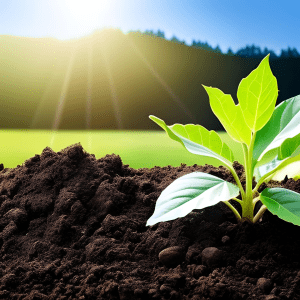
Have you ever thought about what makes up the dirt beneath your feet? That’s right, it’s soil! Soil is the thin layer of material that covers the Earth’s surface, and it’s made up of a complex system of organic matter, minerals, air, and water.
Soil is essential for life on Earth because it’s the foundation that supports plant and animal growth. It’s where plant roots get their nutrients, and it’s home to a vast array of living organisms, including bacteria, fungi, insects, and worms, that help to break down organic matter and make nutrients available to plants.
There are many different types of soil, and they can vary widely depending on factors like climate, geology, and the types of plants and animals that live in a particular area. Some common soil types include sandy soil, clay soil, and loamy soil.
Sandy soil drains quickly and is great for plants that prefer drier conditions, while clay soil holds more water and is ideal for plants that need moist soil. Loamy soil is a mixture of sand, silt, and clay and is considered the best type of soil for gardening and farming because it has a balanced texture and a good nutrient balance.
Soil can be damaged by various factors such as erosion, pollution, and soil compaction. This can impact soil quality and cause it to lose its ability to support life. That’s why it’s important to promote healthy soil.
Soil is the foundation of life on Earth. Understanding what soil is and how it functions can help us appreciate and protect this vital resource.
 Moccasin Cove